Kelp DAO Exploited for $294M Due to Cross Chain Vulnerability in DeFi Security
NullTX·60-word summary·1 min read
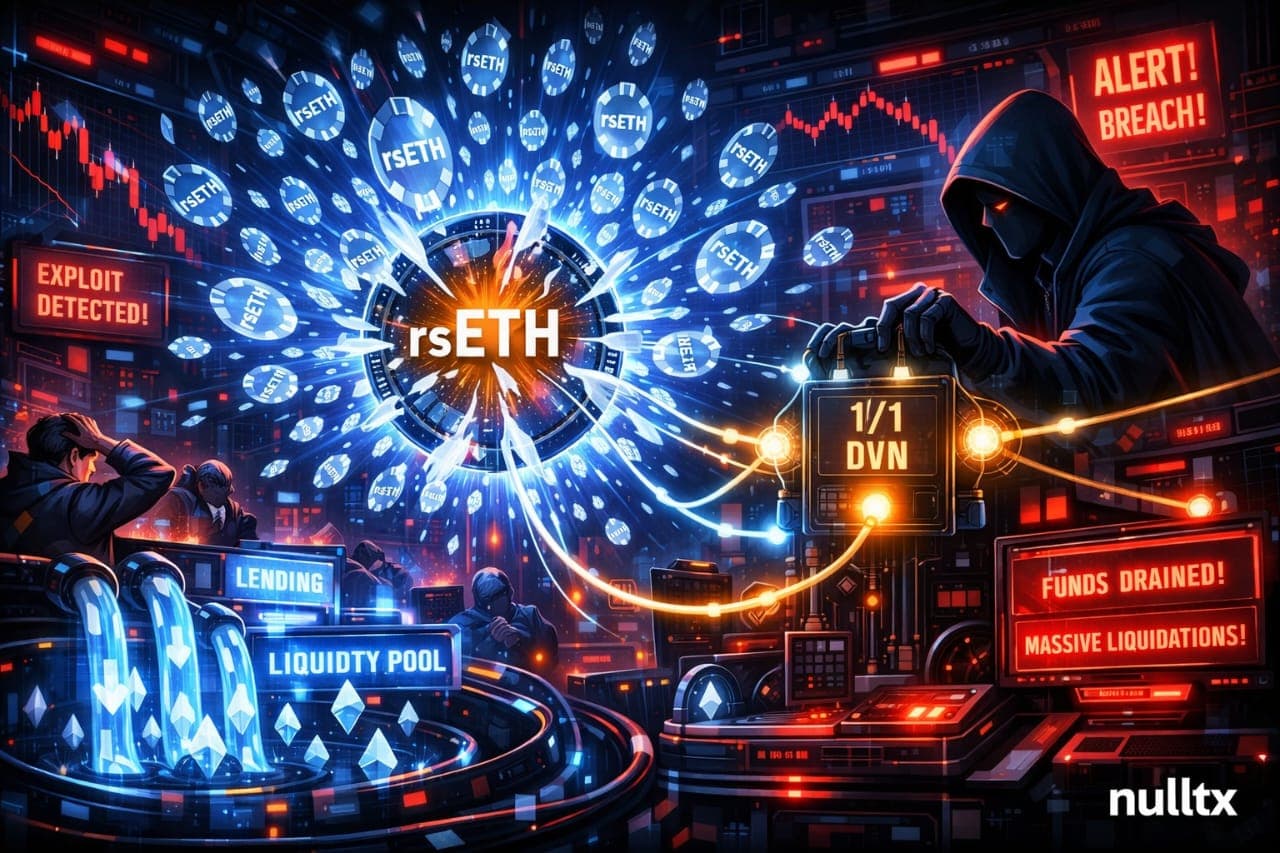
Kelp DAO was exploited for approximately $294 million on April 19, 2026, due to a cross-chain vulnerability in DeFi security. Attackers minted nearly 116,500 rsETH tokens worth almost $293.72 million without backing assets, highlighting ongoing risks in DeFi protocols. The incident underscores the importance of robust security measures in cross-chain DeFi platforms.
Ripple's XRP has surpassed $1.08 billion in ETF assets as Solana's wXRP launch raises security concerns. The backed 1:1 token enables XRP use in DeFi without selling. An XRPL validator warned of counterparty risks similar to $292 million in wXRP. The development sparks debate over security and asset backing in crypto ETFs.
Kelp DAO was hacked for approximately $290 million on April 20, 2026, due to a single-verifier setup that ignored warnings to use multiple verifiers. The attack is preliminarily linked to North Korea’s Lazarus Group. The breach affected at least nine DeFi protocols, including Aave, highlighting the risks of single-verifier configurations in DeFi security.
Vercel confirmed a security incident impacting some customers. The breach involved vulnerabilities in their AI tools, which hackers exploited to access sensitive data. The company is investigating the scope and has advised users to review account security. This incident highlights ongoing risks in cloud services and the importance of robust cybersecurity measures for crypto-related platforms.
Ripple CTO Emeritus David Schwartz has warned the DeFi sector after a $290 million exploit of the Kelp DAO ecosystem. The incident highlights ongoing security vulnerabilities in decentralized finance platforms, raising concerns about the safety of user funds and the need for improved security measures in the rapidly growing sector.
LayerZero attributes a $290 million exploit to North Korea’s Lazarus group, blaming Kelp’s setup for the breach. The company stated that attackers compromised two RPC nodes and DDoS’d others, exploiting Kelp’s failure to follow multi-verifier security recommendations. The attack highlights vulnerabilities in decentralized infrastructure and the ongoing threat from state-sponsored cybercriminals.
Hackers impersonated the eth.limo team to hijack its domain in a sophisticated social engineering attack. EasyDNS CEO Mark Jeftovic confirmed the breach and stated that the company is investigating how the attack occurred. The incident highlights ongoing security vulnerabilities in domain management within the Web3 space, emphasizing the need for enhanced protective measures.