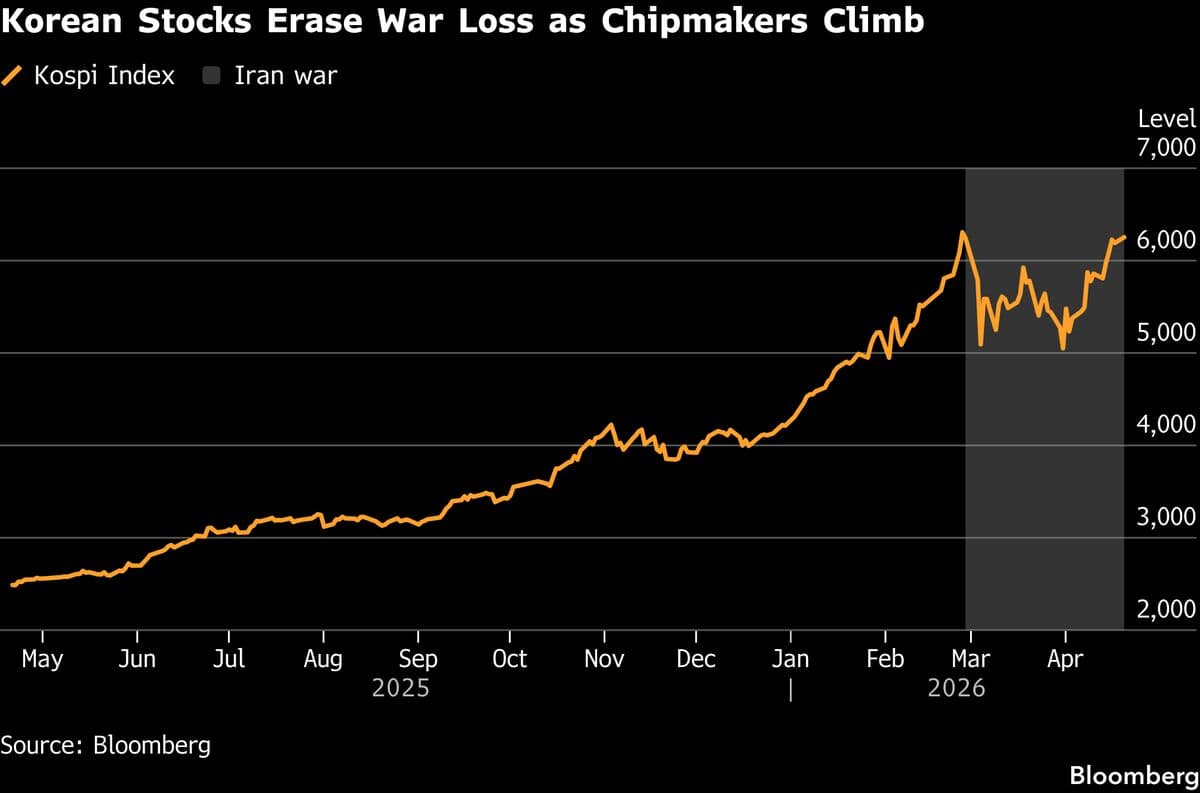
Korean Stocks Erase War Loss as Chipmakers Rise on AI Resurgence
Bloomberg Markets·60-word summary·1 min read
South Korean stocks recovered from Iran war-related losses, driven by a rally in chipmakers as US–Iran tensions reignited interest in AI stocks. The resurgence reflects investor optimism amid geopolitical uncertainties, with technology sectors leading gains. The market's rebound highlights the influence of geopolitical events on Asian equities and the growing importance of AI in investment strategies.
China is expected to import a record volume of US ethane this month, driven by the Middle East conflict that has disrupted regional supplies. The war has deepened China’s reliance on US imports for niche petrochemical feedstocks, highlighting ongoing vulnerabilities in global energy and chemical supply chains amid geopolitical tensions.
The US Navy seized an Iranian-flagged cargo ship in the Gulf of Oman, marking the first such action in the US blockade of the Strait of Hormuz. Tensions between the US and Iran have escalated, with conflicting statements from leaders raising concerns over potential peace talks and a possible ceasefire deadline approaching.
US-Iran peace talks face uncertainty after recent weekend chaos, raising concerns about diplomatic progress. The situation, discussed in Bloomberg’s "The China Show" on April 20, 2026, highlights ongoing tensions that could impact global markets and geopolitical stability. No specific amounts or dates are provided, but the developments signal potential shifts in international relations affecting macro-finance.
A humanoid robot set a new record at a half marathon in Beijing on April 20, 2026, surpassing human performance. The event highlights China's rapid progress in robotics and artificial intelligence, demonstrating significant technological advancements. This achievement underscores the growing integration of AI and robotics in competitive sports and innovation sectors.
Deutsche Bank is marketing a $230 million private-credit deal for AirAsia Aviation Group, a Malaysian budget airline, as of April 2026. The deal aims to test investor demand amid rising fuel prices, highlighting AirAsia's efforts to secure funding in a challenging macroeconomic environment. The transaction reflects ongoing financial strategies within the airline industry to manage increased operational costs.
JPMorgan forecasts a year-long path for Brent crude oil to reach $75 per barrel, amid ongoing tensions in the Strait of Hormuz. Parsley Ong, Asia Energy & Chemicals Research Head, discussed these scenarios on Bloomberg's The China Show, highlighting the potential impact of geopolitical risks on oil prices over the coming year.