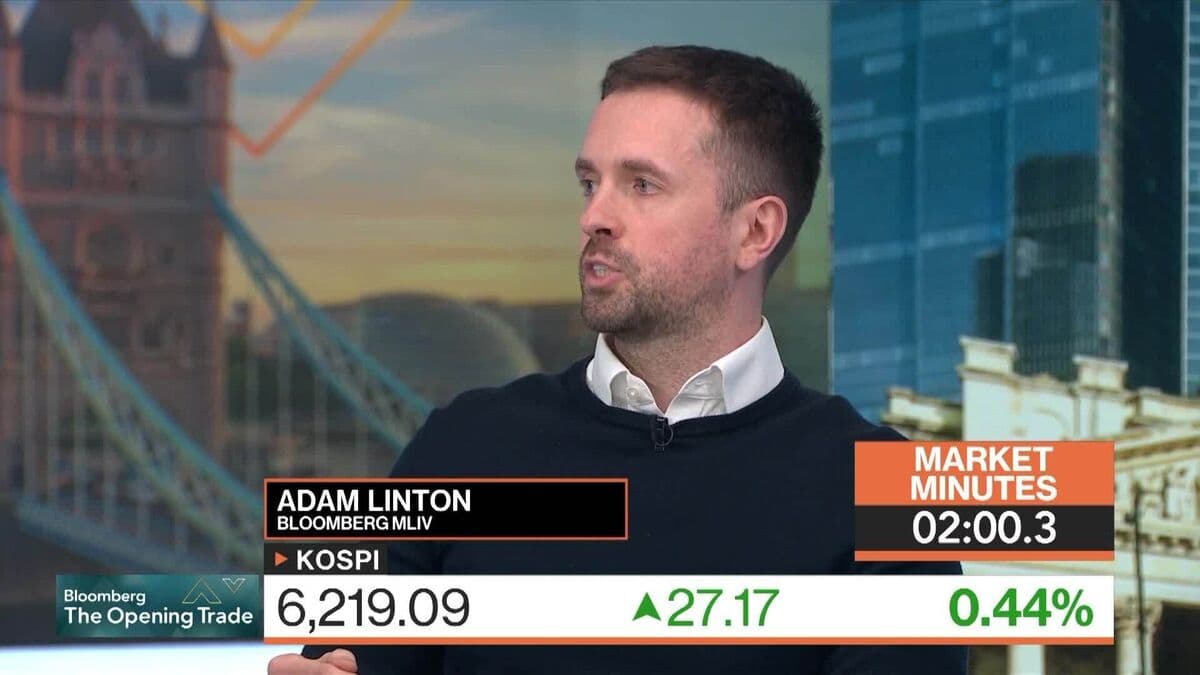
Equities Weaker but Not Overly Concerned on Iran: 3-Minutes MLIV
Bloomberg Markets·60-word summary·1 min read
Equities are weaker today but investors remain cautious, with no significant concern over Iran-related tensions. Analysts Anna Edwards, Guy Johnson, Tom Mackenzie, and Mark Cudmore discussed these market themes on Bloomberg’s "The Opening Trade." The market sentiment reflects a measured response to geopolitical developments, with no immediate signs of major disruption, as of April 20, 2026.
Africa’s renewable energy investments are expected to accelerate as the Iran war prompts nations to reduce reliance on imported oil and gas. The conflict has spurred a shift towards sustainable energy projects, with increased private sector involvement. Experts see this as a positive development for Africa’s energy independence and climate goals.
India and South Korea aim to double bilateral trade and strengthen defense and shipbuilding ties amid Middle East tensions. The agreement seeks to diversify regional partnerships and enhance economic resilience. Both countries view increased cooperation as vital for stability and growth in Asia, with plans for joint ventures and strategic investments.
Iran is uncertain about participating in peace talks in Pakistan after the US seized an Iranian ship and maintained a blockade of the Strait of Hormuz, escalating tensions. The incident, which occurred in April 2026, has cast doubt on prospects for diplomatic resolution amid ongoing regional conflicts and US-Iran tensions.
Israeli stocks are experiencing a surge, breaking out of a valuation range held for nearly 20 years, as investors pay record multiples amid optimism for a post-war, technology-driven economic recovery. The rally reflects strong confidence in Israel’s future growth prospects, driven by expectations of a technology-led boom following recent conflicts. The trend signals a significant shift in market sentiment and valuation dynamics.
Hedge funds are increasingly using aggressive tactics like "gazumping" to attract top traders, with some securing pay packages of over $50 million, according to recruiters. This practice has fueled a price spiral, with clients ultimately bearing the costs through opaque "passthrough" fees. The trend highlights intense competition for talent in the hedge-fund industry, as of April 2026.
Tesla reports Q1 2026 earnings on April 22, with deliveries at 358,023 vehicles, below estimates of 370,000. Wall Street expects EPS of $0.37 on $22.71 billion revenue. The company’s capex guidance exceeds $20 billion, with Terafab costs potentially reaching trillions. Investors are cautious ahead of the earnings release, which could impact Tesla’s stock performance.